
Wooden Animal Puzzles: A Beginner’s Guide to the Hobby
Have you ever sat down to finish one more section of a puzzle and looked up to find two hours gone? That absorbed, easy focus is why jigsaws keep pulling people back, and wooden ones add a hands-on feel that cardboard rarely matches.
If you are new to the hobby, this guide covers what sets wooden puzzles apart, which subjects suit a first build and what to do if a piece goes missing. By the end, you will know how to pick from detailed and engaging wooden animal puzzles that fit your skill level, your shelf and your budget.
Why Do People Get Hooked on Wooden Jigsaw Puzzles?
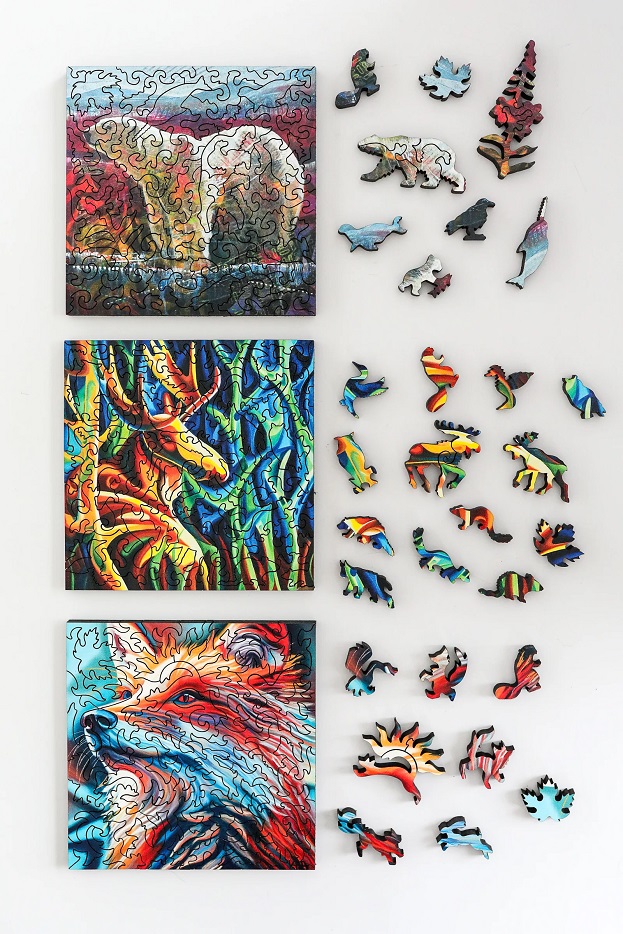
Wooden pieces have some weight to them. A 6 mm piece feels like a small tile in your hand, and it settles into its neighbour with a click you can feel before you look. When a section is done, you can lift it with both hands and it holds together, so sliding it across the table to its spot is easy.
The art is the next draw. Every puzzle comes from original artwork by a Canadian artist, so the finished picture is the reward. As you build, you study the image closely, so you notice brushwork and small details you would miss at a glance.
Animals add a lot to that. A wooden animal puzzle gives you familiar faces with plenty to look at, from a moose hidden in a night forest to the markings on a husky. Each animal brings its own personality, keeping the build interesting from the first piece to the last.
Wood also handles repeat builds well. Edges hold their shape, so you can rebuild the same puzzle next winter, lend it to a friend or keep it on a shelf. Most people end up with a puzzle they own for years instead of a project they finish once.
How Is a Laser-Cut Wooden Puzzle Different From a Cardboard One?
The two types share the same basic idea, but they handle very differently once you start building. The material changes how the pieces feel, how they hold together and how long the puzzle lasts. Here is how they compare.
How Laser Cutting Works
A laser follows a digital cut pattern and burns through the wood along each line. Because the machine repeats the same path every time, pieces fit together the same way from one puzzle to the next. Designers can also cut whimsical pieces shaped like leaves, animals or tools, and some of them form a small separate picture on their own.
Wood and Cardboard Side by Side
Wooden puzzle pieces run about 6 mm thick. Cardboard pieces are usually around 1.5 to 2 mm, so they feel light and flexible. The extra thickness gives wood a solid click and makes pieces easy to pick up, even if you have large hands.
The biggest difference shows up when you lift a finished section. A wooden section holds together in your hands, while cardboard often bends or slips. Wood also handles repeat builds well, and cardboard edges tend to wear down after a few rounds.
Expect a longer build too. A first laser-cut wooden puzzle often takes two to four times longer than a standard cardboard puzzle with the same piece count. Size matters less than you might think. A mini puzzle measures just 12 cm x 12 cm and has 71 pieces, yet it still takes real focus. A larger one at 27.5 cm x 27.5 cm has 284 pieces.
Storage and artwork are close. Both fit in a box that sits on a shelf, and both carry original art printed on the surface.
What to Expect From Cut Edges
The laser leaves a chocolate-brown tint along the edges of each piece and a campfire scent. Many builders like both, since the tint outlines each shape and makes it easier to read. If the smell bothers you, let the puzzle air out in a well-ventilated spot for a few days and it fades.
When Cardboard Is the Better Pick
Cardboard has a place. It weighs less, costs less to ship and is easier to find in very high piece counts such as 2,000 or more. If you want a huge puzzle for a long winter project, cardboard may be your only option.
Which Animals Make the Best Wooden Puzzles?
Your subject changes how a build feels. Some wooden animal puzzles go fast thanks to big colour blocks, while others ask for slow, patient sorting. One tip works for all of them: many wooden puzzles hide the edge pieces inside the picture, so skip the border at the start. Begin with the whimsy pieces, since their odd shapes are easy to spot.
Wildlife
Moose, bears and polar scenes use bold shapes and large areas of colour. That makes them good starter material. Sort your pieces by colour first, then by shape. Some wildlife designs hide small animals like owls or lynx in the artwork, which gives you a bonus hunt once the main subject is in place.
Dogs
A dog puzzle gives you fur patterns, expressive eyes and a lot of personality. Spotted coats and mixed colours are easy to match by pattern. These puzzles are also a favourite gift for dog owners, especially when the breed matches their own. You can even order a custom puzzle from your own pet photo, which comes with about 225 to 250 pieces.
Cats
Cat puzzles often use repeating patterns and tessellation, where shapes fit together in a tight, regular design. They reward patient builders. Pick one motif, find every piece that shows it and build outward from there.
Birds and Bees
Birds and bees come with fine detail and floral surroundings. Petals and leaves look similar from piece to piece, so sort by flower colour and check small markings, like a bee’s stripes or a wing tip. Look for whimsical pieces shaped like honeycomb, birdhouses and feeders, since they give you easy starting points.
Marine Life and Fishing Scenes
Water texture and colour gradients set these apart. Lay out your pieces from light to dark and build in bands, working from the surface down. Group pieces by texture too, such as bubbles or ripples, because it narrows down where each one belongs.
Fantasy and Mashup Animal Art
Dragons mixed with foxes, owls in space suits and other imaginative scenes suit people who have finished the classics. The artwork often has no real-world reference, so you rely on shapes and colour more than on what the animal should look like. Try building without the reference image. You will learn to match shapes instead of pictures, and it gets faster with practice.
What Happens if You Lose or Break a Wooden Puzzle Piece?
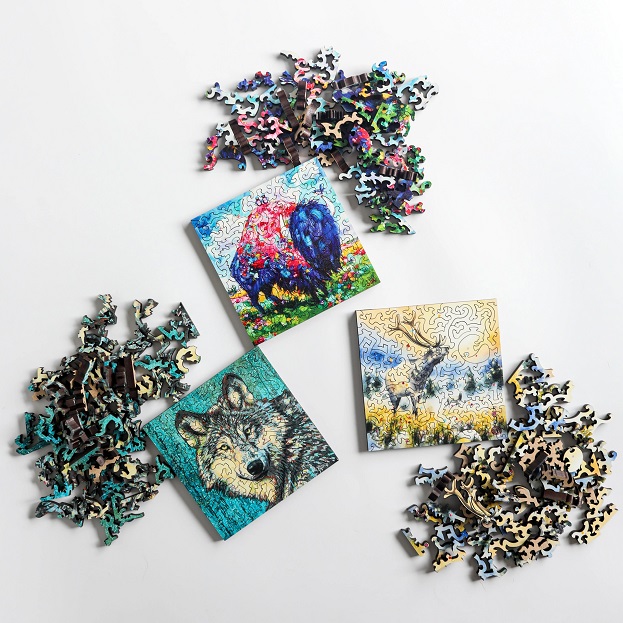
Most buyers worry about this before they order, and it is a fair concern. Pieces can slip under a couch or get chewed by a pet. The good news is that most pieces can be replaced. You fill out a replacement form on the shop’s website and tell the team which puzzle and which piece you need. The team checks its inbox Monday to Saturday and aims to reply within one business day.
A few habits cut the odds of losing a piece in the first place. Count your pieces after each build and before you put them away. Store the puzzle in a sealed bag inside the box, and keep pets out of the room where you build. A tray or board also helps you move a half-finished puzzle without scattering it.
If you worry about buying a puzzle you might not finish in one sitting, you can relax. Wooden puzzles suit slow builds. Work in small sections, leave it for a week if you want and come back whenever you like. Your pieces will be right where you left them.
How Do You Display or Frame a Finished Wooden Puzzle?
A finished wooden puzzle looks good enough to show off. You can hang it, prop it on a shelf or keep it ready for the next build. Here is how to pick the right option.
Frame Options and When Framing Makes Sense
The shop sells five frame styles: a mini single, a mini triple, a small square, a large square and a large rectangle. Prices run from $79 to $189 CAD. Framing makes sense when you love the artwork and do not plan to rebuild it. The mini triple works well for a trio of mini puzzles hung side by side.
Rebuildable or Wall Art
You have two choices. If you want to build it again, keep the puzzle in its box between builds. If you want to hang it, move the finished puzzle onto clear contact paper or puzzle tape, then slide it into the frame. Skip surface glues like Mod Podge. Wooden pieces are heavier than cardboard, and those glues often fail to hold them. Contact paper also peels off later if you change your mind and want to build it again.
Storing a Puzzle You Plan to Rebuild
Lay the box flat or stand it upright on a shelf. Keep it dry and away from direct sun, which can fade the artwork and warp thin wood. Avoid storing it near radiators or in damp rooms like a basement.
Display Ideas for a Collection
If you own several, try a rotating wall where you swap in a different framed puzzle each season. A shelf works well for box art when you like to see your collection at a glance. A gallery grid of small frames on one wall gives you a bold display and lets you mix animals of any size.


