
Choosing Hydraulic Guillotines for Industrial Sheet Metal Fabrication
In sheet-metal fabrication, straight, repeatable cuts are often the foundation of everything that follows. A hydraulic guillotine machine cuts sheet or plate by bringing a blade through the material along a defined line, making it useful for preparing blanks, trimming edges and producing components for fabrication work.
Hydraulic drive systems use fluid power to move the cutting mechanism, making this class of machinery suited to substantial industrial workloads. Unlike thermal cutting, shearing does not melt the material. The process is mechanical, so the quality of the finished edge depends on factors including blade condition, material properties, cutting settings and how securely the sheet is supported. For a workshop handling regular production work, those details can make a noticeable difference to consistency.
Key Features and Cutting Capacities
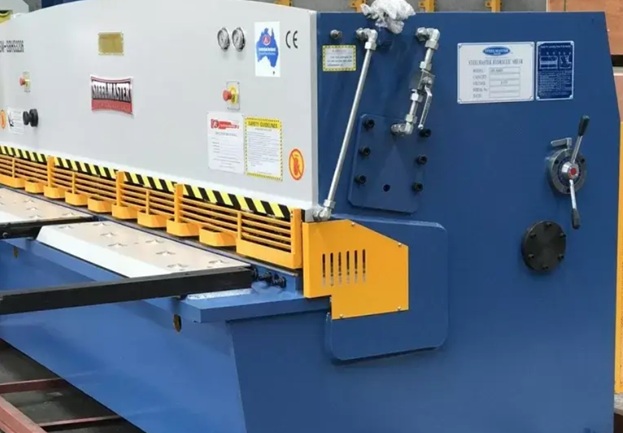
Industrial hydraulic guillotines are particularly relevant when a fabrication operation needs powered cutting across a range of sheet dimensions. Available cutting lengths range from around 1,320 mm to 2,500 mm, while maximum cutting capacities range from 1.6 mm to 7 mm, depending on the configuration.
That spread illustrates an important point: a machine should be assessed by its actual cutting envelope. Positioned behind the cutting area, a motorised back gauge speeds up repeated plate shearing by ensuring consistent dimensions, allowing operators to position material consistently without measuring each cut from scratch.
Some configurations also provide a roving foot pedal, while others incorporate quick blade-gap setting. Blade clearance is significant because the gap needs to suit the material being cut; incorrect settings can affect cut quality and place unnecessary strain on the cutting system.
The Fabrication Floor
Not every hydraulic sheet metal guillotine needs the same combination of capacity and controls. A smaller machine may make sense where sheet widths and thicknesses remain modest, while a longer or heavier-duty configuration becomes more relevant when larger sheets or thicker material are routine.
Options range from standard hydraulic slide machines to dedicated security-mesh units, so the intended application can also influence the chosen configuration. Think beyond maximum thickness, too. Cutting length determines how much material can be handled in one pass, while the back-gauge arrangement affects repeatability.
Workshop Space and Material Handling
Electrical requirements, machine dimensions and available floor space also become practical considerations in an industrial workshop. A machine that fits the specification sheet but creates awkward material handling or installation constraints may be less useful in practice.
The most useful comparison is therefore between the machine and the work it will actually perform. A workshop producing short components from relatively light sheet may not need the same capacity as an operation routinely preparing large plates. At the same time, choosing a machine too close to the minimum requirement can leave little room for changes in workload or material.
Machine Components and Efficiency Features
The design of a hydraulic slide guillotine involves more than the blade and hydraulic drive:
- Working Table and Support Arms: A stable working table supports accurate positioning, while front supports and scales assist with handling and alignment.
- Foot-Pedal Control: Foot-pedal operation leaves the operator’s hands available for material positioning, provided control arrangements and guarding are appropriate.
- Rake and Stroke Adjustments: Variable rake-angle settings can help control distortion when shearing materials of different thicknesses and widths. Adjustable stroke length can shorten cycle times on shorter cuts, improving efficiency during high-volume production runs.
- Material Strength: Machine ratings are typically based on mild steel. When cutting materials such as stainless steel, operators need to account for their higher tensile strength, which can reduce the maximum practical thickness.
Safety and Preventive Maintenance
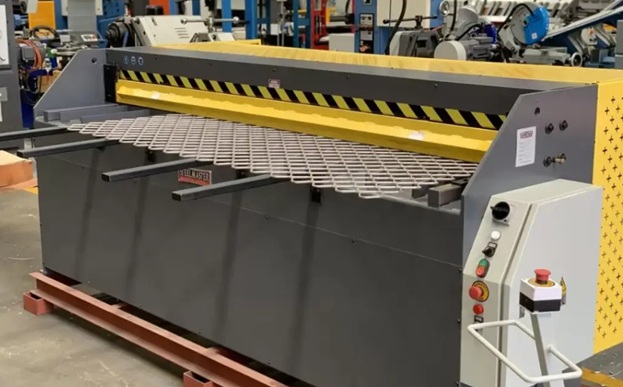
Safety deserves particular attention because the cutting blade is not the only hazard. WorkSafe Victoria identifies the clamp, blade and rear mechanisms, including the backstop, as potential danger areas. Guards, interlocks or presence-sensing systems may be required depending on the machine and workplace arrangement, and operators need appropriate training. Regular inspection, adjustment, lubrication and blade maintenance are also part of responsible machine management.
Before the First Cut: A Practical Checklist
- Match the machine’s stated capacity to the actual materials, sheet dimensions and workload encountered in the fabrication process.
- Assess the complete operating environment, including controls, material handling, guarding, electrical requirements, installation space and access around the machine.
- Maintain the machine according to the manufacturer’s requirements and establish appropriate procedures for inspection, blade work, cleaning and servicing.
- Train operators to recognise the machine’s cutting, clamping and moving hazards and to use its guarding and controls correctly.
- Review the machine periodically as production requirements change, particularly if thicker materials, larger sheets or higher cutting volumes become part of normal work.
Precision That Pays Off on the Production Floor
A hydraulic shear is ultimately a production machine, so its value lies in how reliably its capacity, controls and working arrangement correspond with the jobs it is expected to perform. Cutting length, material thickness, operating features and safety considerations all have a role in choosing the right configuration.
For industrial sheet-metal operations, hydraulic guillotines can provide a practical combination of powered cutting, repeatable positioning and adaptable capacity. The most suitable machine is not necessarily the largest, but the one whose capabilities, safeguards and operating features align with the fabrication work, material range and demands of the workshop.


