
Choose Compression Fittings for Cost-Efficiency
Tradies, HVAC specialists and gasfitters trust the simplicity and reliability of compression-style pipes and fittings. They’re the go-to connectors for all types of pneumatic and hydraulic fluid transfer systems, and are valued as much for their versatility as they are for their dependability.
In addition to creating leak-proof joints without the use of heat or chemical fusion, compression-style fittings also make it possible to join dissimilar tube materials. It’s the critical flexibility installers need to quickly and seamlessly mate different types of tubes, while simultaneously mitigating the risks of incompatibility and the time-consuming need to re-plumb entire pipe runs.
Compression Fittings Are the Perfect Solution For the Pitfalls of Plumbing
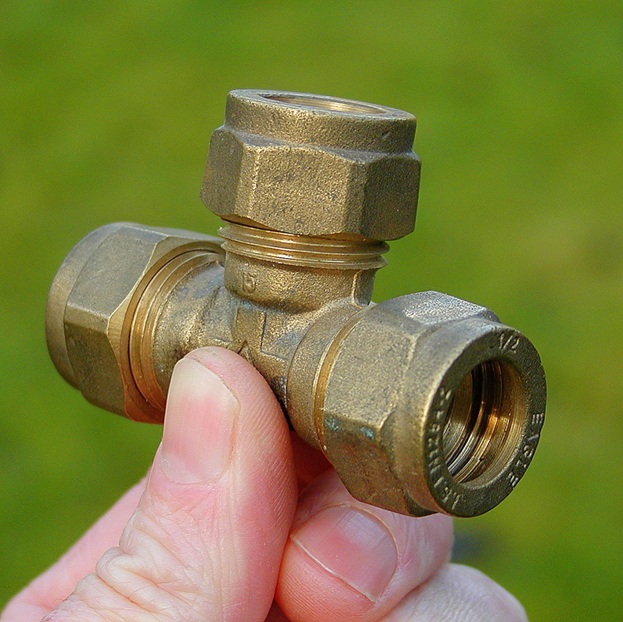
From the low- and moderate-pressure water and LPG lines found in homes, to the high pressure air source and hydraulic lines installed on factory assembly lines and robotic equipment, high quality brass and copper compression fittings are the last word in solid, leak-resistant pipe joints.
These premium-grade fittings, consisting of a body, a compression fitting nut and an internal sleeve (olive), are designed to securely slide over and warp around the end of virtually any 15mm, 20mm or 25mm steel, nylon, or PVC tube. It takes unequivocal simplicity and the ability to withstand a range of pressures to make a truly versatile fitting, and it’s no coincidence that compression-style fittings excel at meeting both standard service, and emergency maintenance needs.
With simplicity and versatility being primary brass and copper compression joint qualities, it’s easy to appreciate the attributes they have to offer.
- Straightforward assembly. Instead of brazing, soldering, or using potentially toxic chemical welding compounds, copper compression fittings require only standard tradie tools to achieve a leak-proof seal. They’re the perfect solution for joining pipes in close confines where open flames or cold-welded solvents could pose a health risk from fire or off-gassing.
- A perfect fit every time. The wrapping action of the olive when tightened allows compression-style fittings to be used with both straight and threaded pipe ends. They fit snugly every time, while relieving installers of either needing to purchase costly threaded couplings, or the headache of having to thread pipes that are already installed.
- Wide ranging applicability. Compression-style fittings are available in standard low pressure, as well as special high pressure variations. Their wide range of working pressures makes them suitable for all but the most hazardous applications – primarily those where corrosive, explosive or reactive gases demand more specialised, flared fittings.
Arguably the most compelling advantage that brass and copper compression pipe fittings have over brazed and soldered joints is their reusability. Compression-style fittings can be used and reused an infinite number of times on an infinite number of installations by simply replacing the compression olive. This is especially beneficial for businesses and facility managers who want to avoid the pitfalls associated with costly and labor intensive sweated and cold joints.
Recognising Where Compression Fittings Can Offer the Biggest Advantages
Make no mistake: as appealing as the savings are, the first and most important order of business for any facility manager or home owner contemplating transitioning to brass and copper compression fitting assemblies is in considering the sheer number and types of pipe joints they actually have. That’s because an average home can contain hundreds of fixed pipe joints, while businesses and plant facilities can have millions – many of which may require regular reconfiguration to match changing requirements.
- Waterworks and plumbing joints. Waterworks and plumbing joints typically include pipes for transporting water to sinks, toilets, and a whole range of hot and cold water fixtures and water treatment/filtering apparatuses.
- HVAC and heating system joints. Many buildings feature massive tubing networks for climate-regulating systems, include plumbing for environmental HVAC and heating systems, equipment cooling and warming systems, and even AS/NZS-allowable gas installations.
- Pneumatic and hydraulic system joints. Compressor-feed air supply lines are used for tools, cleaning, and all sorts of air actuation systems, while hydraulic lines are commonplace for machine lubrication, and lifting and levelling systems.
It’s important to understand too that every joint is a potential point of failure. Solder joints can crack from stress, rust and corrosion can build up inside air lines that aren’t properly desiccated, and eventually all plastic and rubber seals become dry and brittle. And if any of these joints is largely inaccessible or located where either heat or sufficient leverage can’t be applied directly, the cost and effort needed to perform a repair can boggle the mind.
Brass and copper compression fittings don’t need to be sweated, won’t deteriorate and don’t require any special tools or conditions to assemble. They’re also available in a wide range of types, ensuring their suitability for the broadest array of plumbing systems, covering the widest possible range of tubing and facility configurations.
Compression Fittings Made For Every Possible Contingency
Let’s be honest: when it comes to plumbing systems, few installations are ever as neat, orderly or as straightforward as originally planned. Poorly engineered solder joints, and unequal-sized and awkwardly-fitted pipes are among the chief problems encountered by tradies and pipefitters when repairing or modifying existing systems. And when expanding the same system, routing new pipes around electrical conduits, ventilation systems, and an array of other installation obstacles presents its own selection of difficulties.
That’s why in addition to ordinary straight fittings and couplings, compression-style fittings are manufactured in an array of types that are ideal for any routing or plumbing contingency, to include:
- 90° elbows. Male- and female-threaded compression elbows are critical for routing pipe runs around fixed obstacles, and are manufactured in both equal and reducing sizes to match varying pipe diameters.
- Tees and crosses. Tees, together with cross-type fittings, allow installers to split or splice into any existing pipe run. And like elbows, they also come with male or female threading, as well as equal and reducing sizes for variable pipe diameters.
- Coupler adapters. Compression coupler adapters make it possible to transition between male and female threaded fittings, allowing installers to make maximum utilisation of all the fitting assemblies they have.
And for installations where the pipe runs don’t terminate in a fixture or appliance, compression-style stop end caps can also be used to seal off pipes. The use of an olive here guarantees a leak-free termination, with the assurance that the cap can be removed without rusting or sticking, and the system extend as necessary, without any problems.
The Final Word
At the end of the day, while there’s no shortage of pipe-fitting and joining methods available to choose from, only one offers both economy and efficiency. And their ability to perpetually produce “like-new” seals after every assembly and reassembly gives them a reliability advantage that’s unmatched.
High quality brass compression fittings are the leak-resistant preference for residential and industrial pipe joints. They require no special tools or skills to install, and are the perfect fit for the broadest range of plumbed fluid installations.


