
Pneumatic Suspension 101: Everything You Need to Know
The suspension in your car takes multitasking to a whole new level. This elaborate setup of springs, shocks, control arms, ball joints and linkages needs to balance ride comfort and stability, while ensuring maximum grip and tire contact with the road for safe cornering and braking. Parts also support the weight of the vehicle, isolate the car from outside road imperfections and improve handling with more feel through the steering wheel.
Different layouts appear in different vehicles. Recent trends, particularly in the performance and luxury segments, revolve around the use of air suspension. This replaces mechanical springs and shocks with air bags, with the added benefit of adjusting ride height within seconds to suit changing road and driving conditions. Improved comfort, better handling and with advanced management systems, real-time adjustments are just a few things going for air suspension, especially when compared to traditional setups based around coilovers.
What Air Suspension Is
Air or pneumatic suspension is a type of vehicle suspension that relies on pressurized air in air bags (or air bellows) instead of standard metal coil or leaf springs. The air bags can be inflated or deflated to lift and lower the vehicle to suit driving conditions, for instance, when driving off-road, or to maximize fuel use on the highway. Moreover, air pressure can be set to offer a comfier or firmer ride, again depending on individual preferences. This can be done mechanically with separate switches in the dash, or as is more often the case, automatically, with complex management systems that use sensors and cameras among other technologies to monitor the vehicle’s ride height, weight distribution and grip level in each wheel.
The good news for all motorists is that a fully-featured pneumatic suspension kit is now available for both new and older car models as an aftermarket addition. To rule out compatibility, handling or safety issues, suspension parts makers have tailored setups for different models, taking into account crucial factors like overall vehicle weight and dimensions and the vehicle’s intended use. This makes buying and installation simpler and quicker.
Parts in Pneumatic Suspension and How It Works
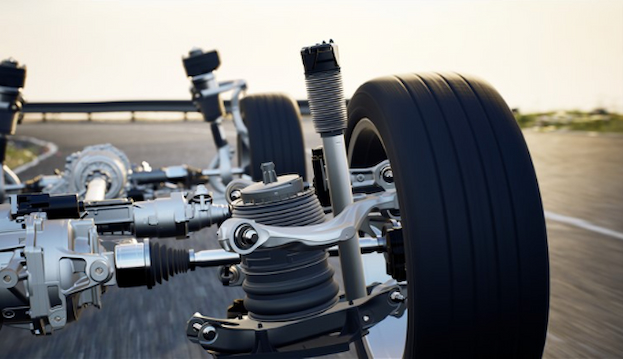
Common components in all sir suspension setups include:
- Air bags: these are made of heavy-duty, vulcanized rubber capable of exceptionally high pressure and able to support considerable weight. Bags are located above each wheel and attach to the car chassis via plates. Double-convoluted air bags are the most common type in passenger cars, resembling two stacked tires. Heavier vehicles like trucks move to taller tapered or roller air bags to even spread loads, particularly in rear axles.
- Tanks and compressors: Compressors generate pressurized air to inflate air bags in a matter of seconds. Pressurized air is stored in tanks (often as part of the compressor).
- Air delivery lines: These deliver air from tanks to the bellows. Cheaper air lines are made of reinforced rubber, but for higher pressures and a leak-free suspension, a better bet is braided steel lines.
- Solenoids and valves: These are often located just past the compressor. Solenoids are electric devices that open and close valves, thus controlling air volume, pressure and flow direction.
- Sensors and management systems: Ride height and pressure sensors located above each wheel monitor how level the vehicle is and the pressure in each air bag. This data is relayed to electronic management devices to evenly distribute pressure or change settings according to driver input. Automated systems are a convenient set-and-forget option, but for off-roading and technical terrain, manual systems with adjustment for each wheel offer improved maneuverability and control.
Benefits and Why Consider Air Suspension in Your Car
No suspension is perfect, but an aftermarket pneumatic suspension kit gets awfully close. Prices have come down considerably, with the tech no longer reserved for the high-end car sector. There’s also more attention to quality, with better builds and tougher materials providing improved durability, fewer issues and more versatility with incremental settings to dial in the desired ride height, comfort and handling in any car. With that said, air suspension benefits vehicles in more ways than one:
- Improved comfort: Adjusting air volume and pressure in the air bags smooths out road imperfections for a comfier ride. Drivers can also experiment with different comfort settings.
- Reduced vibrations, noise and harshness (NVH): Luxury cars have incorporated air suspension to reduce noise, less rattling and vibrations, and fewer instances of impact and jolting reaching the cabin from potholes, bumps and other road imperfections.
- Lower fuel use: Lowering the ride height creates lower drag, meaning cars literally glide over the road and deal with less oncoming air. This has a considerable effect on fuel consumption.
- Versatility over different types of terrain: Air suspension first appeared in military vehicles, transitioned to off-roaders and gradually made its way into passenger cars. The ability to lift and lower one or all wheels ensures improved handling, stability and grip over varied terrain and road surfaces.
- Versatility with heavier loads: High-pressure ratings in the air bellows provide car and truck owners with the ability to haul heavier gear. By lifting the car and rear springs, air suspension helps to evenly distribute weight and provide maximum grip across all four wheels.
- Lower parts wear: Reduced vibrations and harshness lowers wear, stress and damage in supporting parts, including control arms, steering linkages and tires.
Look to proven suspension brands for outright durability and performance, and have the parts installed and calibrated (including new shocks) by professionals to reap the benefits of enhanced comfort, improved handling and a suspension setup that quickly adjusts to changing road conditions.


