
How to Style Animal Print at Home Without Overdoing It
Love it or hate it, animal print has proven that it’s not a passing trend. In interior design, this bold pattern is gracing homes and even winning over minimalists when used sparingly and styled with intention. If you’re planning to jump on the bandwagon, there are a few things to keep in mind.
Less is More
Animal print already has a strong presence. Therefore, one piece is often enough to make a statement. For instance, you can experiment with the trend and still keep it simple by incorporating animal print with a hide rug.
Laying down animal print on your floors is an attention-grabbing move. If you decide to go in this direction, many interior enthusiasts recommend choosing natural cowhide rugs over imitation alternatives. While imitation animal-print rugs can be budget-friendly, some may appear uniform and artificial.
The natural cowhide rugs have authentic variations in color, markings, and texture that are impossible to replicate perfectly. No two hides are the same, which gives the rug a distinctive character and helps it feel like a carefully selected design feature rather than a mass-produced accessory.
Another reason to opt for a real cow skin rug is the variety available. Cowhide rugs come in patterns ranging from caramel brown, dark brown, and white mixes to striking black-and-white combinations and solid ivory designs that blend effortlessly into lighter interiors. You may also come across beige brindle Brazilian hides, prized for their subtle streaking and layered tones.
When shopping online, it is worth paying attention to how the rug is presented. Because every natural hide is unique, reputable retailers usually measure, inspect, and photograph each rug. This allows you to view the exact hide you will receive rather than relying on a generic product image.
Knowing the exact shape, dimensions, and markings beforehand makes it easier to choose a rug that complements your space and achieves the look you have in mind. Besides cowhide rugs, another way to inject a dose of animal print into your home décor is through animal print cushions. Unless you’re going for a maximalist look, it’s often best to let one element take center stage.
You can either opt for a statement rug or a couple of animal-print cushions. If you decide to use both, tone down the number of cushions and let the throw be in the spotlight in this scenario. Alternatively, choose a statement piece of furniture, such as an ottoman or occasional chair upholstered in animal print.
Stick to Neutral Surroundings
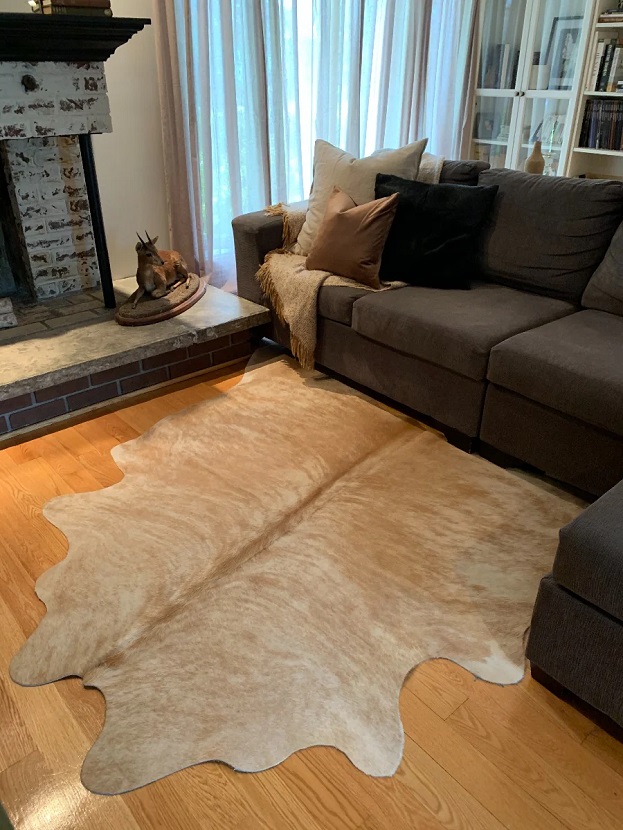
Next, when introducing animal print into a space, it’s important to maintain balance in terms of the other colors you already have in the room. Animal print tends to work best when surrounded by a calming palette of neutrals such as cream, beige, taupe, soft grey, black, and warm brown.
These colors allow the pattern to stand out and prevent the room from feeling visually cluttered. If your chosen animal print features brown and ivory tones, echo those colors elsewhere in the room through throws, curtains, or decorative accessories to create a cohesive look.
When it comes to patterns, restraint is usually your friend. Mixing animal print with too many competing prints can make a room feel busy. Instead, pair it with simple textures, solid-colored fabrics, subtle stripes, and understated geometric designs. This ensures that the result appears tasteful, not chaotic.
If you want to incorporate both an animal-print rug and cushions, keep the cushions limited in number and let the rug remain the dominant feature, and keep the surrounding décor relatively understated. By anchoring animal print with neutrals, limiting competing patterns, and allowing one feature to take center stage, you can enjoy its character and warmth without tipping into a look that feels excessive.
Keep It in the Family
Mixing different animal prints is acceptable, and many designers often pair zebra, leopard, cheetah, and cowhide patterns because they share similar organic shapes and naturally occurring color palettes.
However, if you’re new to the trend, a safe rule of thumb is to stick to a single animal print within each room. Limiting the room to one dominant print allows the pattern to stand out and gives the space a more intentional feel. If you’d like to repeat the print around the room, like on a rug, accent chair and maybe a couple of pillows, it’s often best for those pieces to share the same pattern or at least the same color family.
For instance, a leopard-print rug can be paired with cushions that feature similar tan, brown, cream, and black tones. A zebra-print rug works well with accents that echo its bold black-and-white contrast, such as striped cushions or a monochrome upholstered chair. Repeating either the pattern or its colors throughout the room helps tie everything together. You can introduce a different animal print in another room and create visual interest throughout the home.
Once you’ve become more comfortable styling animal print, you can always branch out and experiment with mixing patterns in a more layered way. You can also vary the scale, and for instance, pair a bold and large leopard print with a smaller and more subtle zebra stripe. Keeping one print more dominant and the other more understated helps create balance and depth without overwhelming the space.


