
Everything You Need to Know About Truck Alignment
Noticing uneven tire wear on your truck? Or the rig pulling left or right, even at low speeds? If this is accompanied by odd squealing sounds and the unusually difficult steering, it’s high time to check for misaligned wheels. This can happen in daily driving on potholed roads due to worn tires or suspension parts and if your truck has been involved in an accident. Either way, your truck won’t be performing at its best and you risk costlier repairs down the road.
What Wheel Alignment Is and Why It’s Important
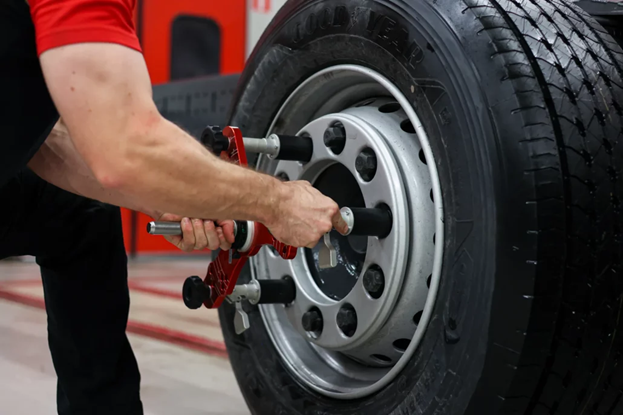
To ensure proper tire contact with the road, trucks get a wheel truck alignment. This can significantly improve handling, enhance safety and increase road comfort. At its core, alignment is the adjustment to the truck’s suspension, and not the tires or wheels. The aim is to adjust how the tires sit with the road surface.
Signs Your Truck Needs a Wheel Alignment
A frequent sign of misaligned wheels is the truck pulling left or right, without steering input. Steering wheels can also be off-center or vibrate, even on the straights. Drivers also complain about void steering feel, with little or no feedback. More obvious signs are uneven wear in the outer or inner edges in the tires, or between left and right tires. These can also put out strange noises and affect steering and handling at all speeds. All issues reduce the traction tires get with the road surface, meaning higher fuel use, vehicle instability in turns and clunking noises from the wheels and suspension if the issue isn’t promptly fixed.
Camber, Caster and Toe
Aligning your wheels isn’t a DIY job, as it involves specialized equipment -laser-based wheel alignment machines, 3D imaging systems and tools that measure camber, caster and toe, all operated by qualified technicians.
Camber is how far the wheel tilts outward (positive camber), away from the vehicle. or how far inward it leans toward it (negative camber). Having the wheels closer to the centerline of the truck ensures truck stability, specifically in cornering. Misaligned wheels at noticeable angles will cause wear in the inner or outer edges, depending on the direction they point. Common causes are worn bearings, ball joints and other suspension parts.
Caster refers to how far forward or backward from the driver the steering is tilted. Positive caster is the steering axis tilting toward the driver, while negative caster is the steering axis tilting away from the driver and toward the front of the truck. Common causes are worn, bent, or damaged suspension components, specifically spindles, struts or control arms in negative caster, and tire feathering or the jagged and angled patterns in the tread ribs, with one rib more worn than the other.
Toe is the extent to which the tires turn inward or outward when viewed from above. Toe-in is the tires pointing slightly inward, often caused by worn ball joints, bearings or bushings, or incorrect tie rod adjustment and leading to heavier steering feel. Toe-out is the front of the tires pointing slightly outward, usually from loose steering linkages like tie rods and steering boxes. Neither is good for handling, and eats away at the tire treads.
Causes and Common Replacement Parts
Incorrect tire pressure (reducing the contact patch with the road), frequent driving on bad roads riddled with potholes and speed bumps, aggressive driving, including hard cornering and braking, hitting curbs and minor or more substantial collisions all lead to misaligned wheels and tires. Other reasons are modifications to your trucks, such as lift kits or larger wheels that alter the factory vehicle geometry. General wear and tear in the suspension parts also plays a significant part, especially in older vehicles.
Restoring optimal car geometry requires identifying routine wear in tear in key suspension parts. Most common failures are in the ball joints and wheel bearings (boot punctures, bearing wear, rust, debris etc.), causing the tires to tilt and not sit at the correct angle. Wear also transfers to the outer or inner edges of the tires, reducing traction and making steering a task. Other parts regularly affected are the linkages in the control arms, loose tie rods and top struts in vehicles with MacPherson setups.
The more complex the truck suspension layout, the more frequent and costly the misalignment problems are. Heat, corrosion, metal fatigue and age are the main reasons parts wear out sooner than later, besides driving habits or road conditions. To counter problems, parts involved in truck alignment are usually replaced as left and right pairs, or as full camber, caster and toe kits, with packaged parts and mounting hardware for different truck makes and models.
Benefits of Wheel Alignment
Scheduled wheel alignment obviously has multiple benefits. This restores handling to factory settings, with the vehicle easier to control, and becoming more predictable on steering input. It also extends tire lifespans by dealing with uneven tire wear, saves money with lower fuel use, and nets drivers a safer and more comfortable ride. Misaligned wheels fixed on time will also spare you the cost of expensive suspension repairs and lower costs due to minimized wear and tear.


