
3 Home Cinema Facts You Can’t Ignore
There’s an old saying that facts don’t disappear just because we ignore them. Whoever said that had a point. You can ignore certain things for a while, but that doesn’t make them any less true. The same goes for home cinema.
You might ignore things like screen size, speaker placement, and room acoustics, but sooner or later, they’ll affect your viewing experience.
A White Wall Isn’t a Substitute for a Proper Screen
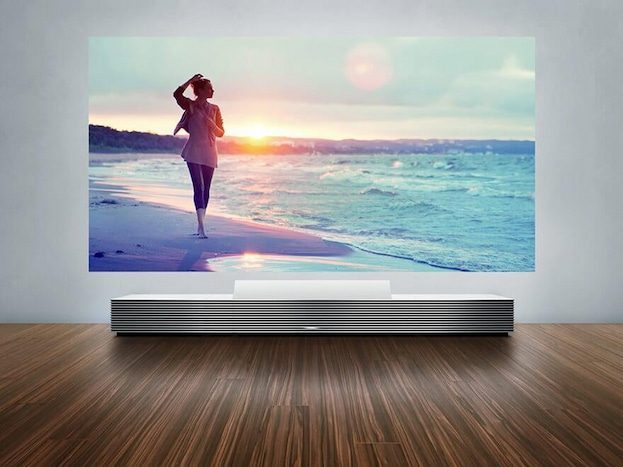
Technically, a simple white wall can double as a projector screen. But even perfectly painted walls have texture and colour variations that can reduce image sharpness and contrast. So, the importance of a proper projector screen is something that can’t be ignored. A high-quality screen for projector use helps create a more cinematic viewing experience by improving image clarity, contrast, and colour accuracy.
Projector screens come in a few common forms. Fixed-frame screens are permanently mounted and provide a perfectly flat surface. If you’re setting up a dedicated home cinema room, this type is your best bet.
Manual pull-down screens are a practical and affordable solution. You can roll the screen when it’s not in use, while motorized screens add convenience with the touch of a button. Portable screens are ideal for those who need flexibility and enjoy movie nights in different locations.
Next, the material also plays an important role in image quality. Matte white screens are widely used for providing balanced brightness and wide viewing angles. Grey screens can improve perceived contrast, particularly in rooms with some ambient light, while ambient light rejecting (ALR) materials are designed to minimize the effects of external light sources and deliver a more vivid picture.
Some premium screens also feature acoustically transparent materials, allowing speakers to be placed behind the screen for a more authentic cinema experience.
Choosing the right size is equally important. A screen that’s too small can limit immersion, while one that’s too large may overwhelm the room or reveal image imperfections. Screen sizes are usually measured diagonally and commonly range from 80 to 150 inches or more. The ideal size depends on factors such as room dimensions, seating distance and your projector’s capabilities, ensuring a comfortable and truly cinematic viewing experience.
A Great Setup Is Not One Piece of Equipment
Having a good screen is important, but so is the projector itself. A quality projector determines brightness, contrast, resolution, and how well the image holds up in different lighting conditions. Even the best screen can only reflect what the projector delivers, so pairing the two correctly is essential.
Next, the right audio combined with the right display completes the cinematic impact. After all, nothing is more transformative than the soundscape of a film. Quality speakers and a subwoofer bring depth and impact to what you see on screen. You can clearly hear the small and almost innocuous details that build tension and entice you into the cinematic world.
Speaker placement also matters. Correct speaker positioning can help create a more natural and cinematic soundstage.
Other supporting gear, such as AV receivers or sound processors, helps manage and balance both picture and audio signals, ensuring everything works smoothly together. Even small details like cables, calibration tools, and streaming devices contribute to overall performance more than people often realize.
Another factor you don’t want to compromise on is your source material. It’s a shame to create an impressive home cinema with a quality projector, proper speakers, and careful setup, only to rely on an Apple TV or Roku for all your viewing. Although streaming services are convenient and show 4K content, the video and audio you get are not delivered in full original quality. If you want to see and hear everything as close as possible to the original cinematic experience, you need a high-quality source device such as a 4K Blu-ray player that delivers the film as faithfully as possible to the director’s vision.
You Don’t Need a Dedicated Room
Another question that some may have is whether a separate room is necessary for home cinema. The fact is, it isn’t. While a dedicated room gives you full control over lighting, acoustics, and layout, which makes it easier to unlock the full potential of your equipment, it’s not essential.
Although there are challenges in the process, you can still create a cozy and immersive setting with the right setup and attention to detail. For instance, you can use your regular living space by working with what you already have. Position the screen on the clearest wall and face your seating area towards it. Try to reduce light from windows with curtains or blinds, especially in the evening. Arrange your sofa so you sit directly in front of the screen, not at an angle. Place the speakers around it so the sound feels like it comes from all directions, not just one side of the room.
In a basement, you often get a natural advantage because there is less light. Use that to your benefit by controlling brightness and focusing on sound. Keep the layout simple and build the room around the main viewing area.


