
Stay Charged Off-Grid: The Ultimate Guide to Survival Solar Equipment
Imagine being caught in a blackout, a remote campsite, or an emergency where every battery is drained. What’s your backup plan? When traditional power sources fail, having access to renewable energy can make the difference between panic and control.
The solar survival equipment is a powerful solution that harnesses sunlight to generate energy anytime, anywhere. Designed to keep you connected and prepared in crucial moments, these compact tools provide independence, reliability, and peace of mind when you need it most.
Core Types and Uses
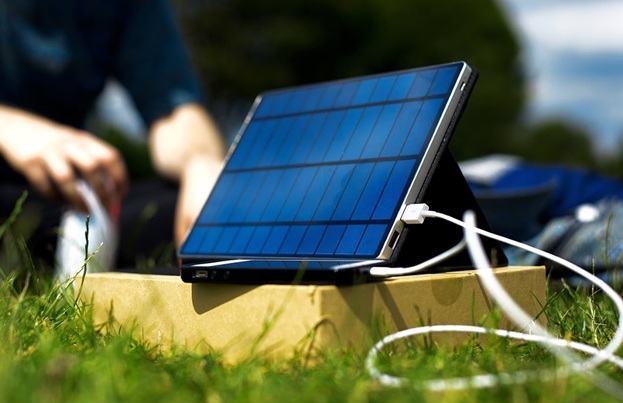
When you’re heading into the wild, a pro-grade solar camping gear keeps your campsite functional, safe, and comfortable. Based on the types of equipment commonly found on solar gear collections, these tools can be grouped into a few essential categories, each with a clear role in camping scenarios.
Solar Chargers and Power Banks
These are among the most practical tools for campers. A compact solar charger and a high-capacity power bank (typically around 20,000 mAh) enable you to store energy during the day and utilize it when the sun sets.
They keep your phone, GPS, camera, or headlamp powered, which is essential for navigation, communication, and capturing your trip. Instead of worrying about dead batteries, you can recharge devices daily, which is especially useful on multi-day trips.
Portable Solar Panels
Lightweight solar panels, available in various sizes, form the core of solar camping setups. Set up panels in sunlight to power devices or recharge power banks at your campsite. Larger panels can handle small appliances if paired with a battery system.
Solar Emergency Radios
Solar-powered radios with hand-crank backup are designed for reliability. They provide weather updates, emergency alerts, and sometimes built-in flashlights. When camping in remote areas, this adds a critical safety layer, keeping you informed about storms or changing conditions.
Solar Lighting Solutions
Solar lighting systems store energy during the day and illuminate your campsite at night. They improve visibility, prevent accidents, and create a comfortable environment after dark, without draining your main power supply.
Solar Survival Kits and Integrated Systems
Some gear bundles combine multiple tools, such as chargers, cables, and accessories, into one compact kit. This type of solar camping gear is great for beginners or short trips, offering an all-in-one solution that reduces packing complexity while ensuring you have essential power options ready.
Solar-Powered Water Purification Support
While not purely solar devices, some systems integrate with solar setups or are included in survival kits. Access to clean water is crucial. When paired with solar-supported purification tools, these systems enhance self-sufficiency in remote environments.
Other Practical Uses beyond Camping
Solar-powered survival gear proves just as valuable outside the campsite. During power outages at home, it can keep essential devices like phones, routers, and emergency lights running. It’s also highly useful for road trips, where you may need to charge devices without draining your vehicle battery.
In emergency preparedness kits, solar tools provide a reliable backup energy source that doesn’t depend on fuel or grid access. They’re even handy for everyday outdoor activities like hiking, fishing, or beach trips, thus ensuring you always have access to power, no matter where you are.
Power Capacity
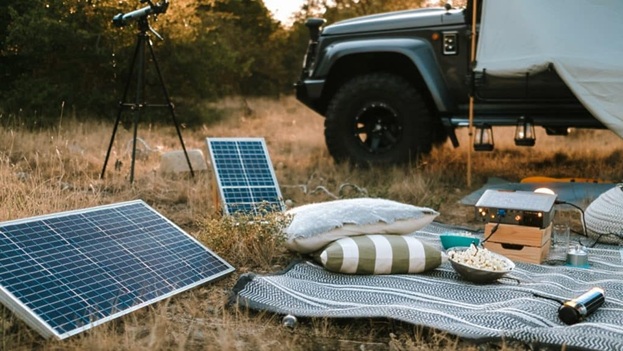
Power capacity is one of the most important factors in solar survival gear. It refers to how much energy a device can store and deliver, typically measured in milliampere-hours (mAh) or watt-hours (Wh). The higher the capacity, the more times you can charge your devices before needing to recharge the unit itself.
For example, a 10,000 mAh solar power bank is usually enough for short trips, offering one to two full phone charges. Meanwhile, a 20,000 mAh or higher capacity is better suited for multi-day camping, allowing you to charge multiple devices several times.
However, capacity isn’t just about bigger numbers. Due to energy loss during conversion, the actual usable power is often lower than advertised, typically around 65–75% of the total capacity. All in all, keep in mind that higher capacity means more power and longer use, but it also adds weight and takes longer to recharge via sunlight.
Multi-Function Features
One of the biggest advantages of modern solar-powered survival equipment is its multi-function design, combining several essential tools into one compact device. Instead of carrying separate items, campers can rely on gear that integrates charging, lighting, communication, and emergency support features all in a single unit.
Many solar power banks, for example, now include multiple USB ports, built-in cables, and even wireless charging pads, allowing you to power several devices at once without extra accessories. This is especially useful at a campsite where space and weight are limited.
Some models also feature integrated LED flashlights with SOS modes, turning a simple charger into both a light source and an emergency signalling tool. Solar emergency radios take multi-functionality even further. They often combine AM/FM weather broadcasts, hand-crank charging, USB output, and built-in lights, ensuring you stay informed, powered, and visible even in remote areas.
There are also hybrid tools like solar-powered lantern systems or flashlights that double as power banks, offering both illumination and device charging. Some advanced designs even include compasses, glass breakers, or alarms for added safety.


