
High-Impact Details: A Buyer’s Guide to Car Mirrors
Newer cars may be brimming with all the latest safety tech, but it’s the basics like brakes, mirrors and lights that most drivers rely on. Getting to destination not only requires elementary driving skills and situational awareness, but functional car parts that inform you of possible dangers ahead.
Car mirrors in this sense offer an all-round view of your driving environment, letting drivers turn, back up or change direction with no fuss or detriment to other traffic participants. The first rearview mirrors date back to early days of cars, and called “cop spotters” were more about evading fines than general traffic safety.
As cars grew in size, power and capability, and roads widened to multiple lanes, the addition of the passenger and driver-side auto mirror helped drivers in their blind spots. These parts today are mandatory on all road-going vehicles. Like other auto tech though, mirrors have also kept up with the times to include dozens of convenience and safety features, with camera and sensor-based blindspot monitoring the most widespread.
Basic Car Mirror Functions
Car mirrors increase safety by improving all-round visibility to the side and rear of the vehicle. Rearview and side mirrors do this in different ways. Rearview mirrors help drivers by:
- Monitoring traffic behind your vehicle – Mirrors raise awareness of approaching vehicles from the rear, tailgating vehicles, and those that are frankly too close.
- Assessing surroundings – The wide field of view helps spot pedestrians, cyclists, objects and other vehicles that may be in your path when reversing, parking, or leaving the driveway.
- Avoiding collision – Increased visibility helps avoid unwanted impact and collisions.
Besides upping overall traffic safety, an auto mirror hones driving skills, by helping in basic maneuvers such as reversing, parking, changing lanes, overtaking, and merging on highways. The essential car parts additionally let drivers check up on rear passengers and pets. And with recent tech, they’re crucial in avoiding blinding light and glare from approaching vehicles.
Rearview mirrors are complemented by left and right (or driver and passenger-side) side door mirrors. Also known as wing mirrors, these provide a wider field of view to the sides of the vehicles (with convex glass), revealing objects and vehicles in blindspots and adjacent lanes when changing lanes, overtaking or turning. Many vehicles today have the indicators integrated into the side mirrors, so the parts also signal your intentions of turning or changing direction to other traffic.
Common Issues and When Replacements are Necessary
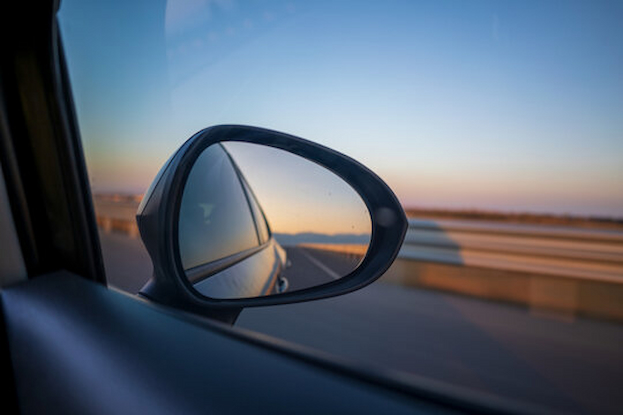
Functional mirrors reduce the risk of accidents by increasing visibility. This though depends on multiple factors. Mirrors with scratched, broken and damaged glass are a safety hazard and obstruct your view. The same applies to those that have missing parts or can’t be adjusted to suit the driver.
Mirrors must also be replaced if outer housings that provide the structural support for the mirror assembly (and additional safety systems) have sustained damage. Accidents, tampering, subpar builds reduce side mirror functionality and overall safety. To prevent unpleasant scenarios, voiding insurance claims in accidents and collisions, or increasing your risk of fines and demerit points, read up on the current legal requirements in your province or territory.
Buying Considerations
Vehicle Compatibility
Whether it’s side or rearview mirrors, always buy replacements that are made exclusively for your vehicle. Besides seamless fit and factory looks, compatible replacements ensure the correct size and glass type, as well as the functionality of secondary systems, such as indicators and blindspot monitoring. Original equipment parts will always be a safer but more expensive bet, due to the fact they’re made to the exact vehicle manufacturer’s standards.
This takes into account housing materials, the quality of the glass, wiring for heating and electrical adjustment and more. Aftermarket mirrors are a viable alternative, especially for older or discontinued models. They include most (if not all) of the factory features at a fraction of the price. Either way, timely replacement of defective mirrors and other car parts ensure they work and last.
Driver vs. Passenger-side Mirrors
Driver-side mirrors tend to be more expensive because of the power adjustment and heating functionality. Factory models will also work with cameras and sensors in displaying warnings or audible alerts for blindspots.
Power vs. Manual Adjustment
Manually-adjusted auto mirrors are rare and more frequent in older, cars and trucks. However, even these vehicles can use workarounds to install mirrors with electrical power adjustment and features like folding and heating. These are basic functions in new and recent models. Needless to say power mirrors come at a premium precisely because of the convenience, functionality and added electronics and wiring.
Additional considerations are choosing mirrors with inbuilt indicators (to replace damaged factory units) and mirrors with a puddle function (with lamps under the housing) to help spot puddles and potholes. And, if buying from third-party suppliers, you need to ensure that replacements adhere to the factory requirements (size, fit, color, glass types and adjustability) and come pre-packaged with matching bases, mounting hardware and compatible wiring harnesses for heated power mirrors.


